

Search engine optimization has changed dramatically over the last few years. In 2026, success in search rankings depends less on repeating keywords and more on understanding user intent, context, and content relevance. Search engines now evaluate how well a page answers real questions and connects related topics together. That is why Semantic SEO 2026 Across has become one of the most important digital marketing strategies worldwide.
Companies, bloggers, online stores, and publishers in the USA are investing heavily in semantic SEO techniques to increase organic traffic, improve visibility, and provide better user experiences.
This article explains how semantic SEO works in 2026, why it is essential for modern websites, and how businesses can create content that performs well in search engines and AI-driven search platforms.
What Is Semantic SEO 2026 Across?
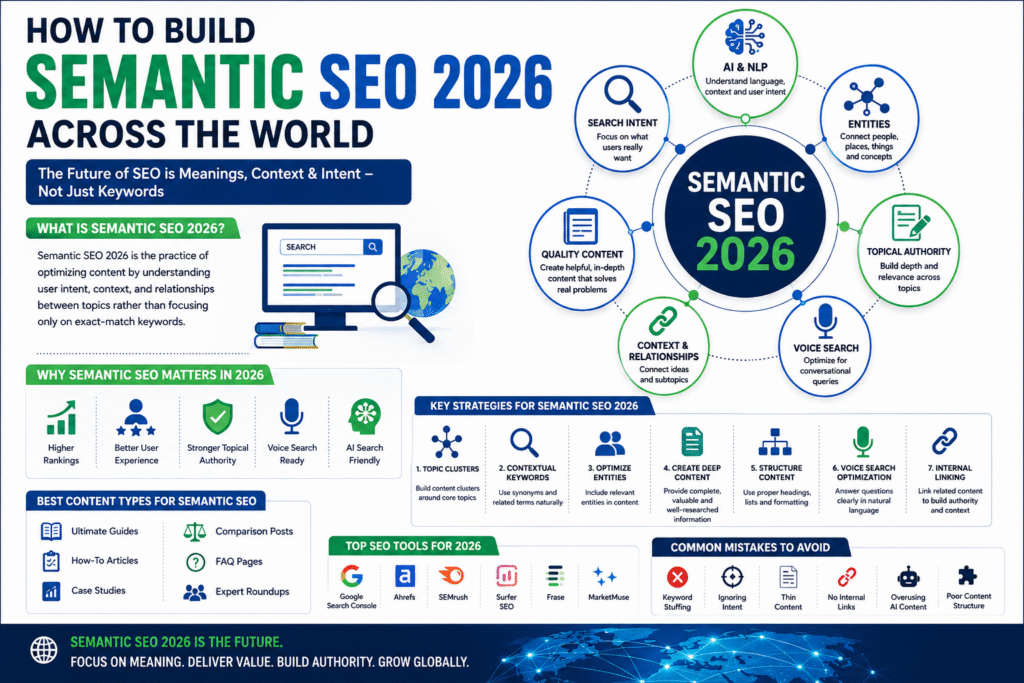
Semantic SEO 2026 “Across” refers to optimizing website content around meaning, context, and search intent instead of relying only on exact keywords.
Modern search engines use advanced technologies such as
- Artificial Intelligence (AI)
- Natural Language Processing (NLP)
- Machine learning
- Entity recognition
- Behavioral analysis
These technologies help search engines understand the purpose behind a search query.
For instance, if someone searches for
“Top laptops for remote workers in the USA”
Google can identify related ideas like
- portability
- webcam quality
- battery performance
- business productivity
- video meeting features
This means search engines focus more on understanding the topic rather than matching a single keyword phrase.
Why Semantic SEO Is Important In 2026
Semantic search is reshaping online marketing across the globe. In highly competitive markets like the USA, semantic optimization gives websites a major advantage.
Key Advantages of Semantic SEO 2026 Across
1. Stronger Search Rankings
Semantic optimization helps Google better understand page content, increasing opportunities to rank for multiple related searches.
2. Better User Engagement
When users find accurate and useful answers, they stay longer on the website and interact more with the content.
3. Increased Authority
Publishing detailed topic-focused content helps establish trust and expertise within a niche.
4. Voice Search Readiness
Voice assistants depend on conversational language and semantic understanding to deliver accurate results.
5. AI-Friendly Content
AI-powered search systems prioritize high-quality contextual information over outdated keyword-stuffing tactics.
How Semantic SEO Works in 2026
Search engines now evaluate many factors beyond simple keyword usage, including:
- User intent
- Content depth
- Topic relevance
- Entity connections
- Website authority
- Content freshness
- User behavior metrics
This approach allows search engines to provide more accurate and personalized search results.
Understanding Search Intent
Search intent is one of the most important elements of Semantic SEO 2026 Across.
Informational Intent
Users are searching for knowledge or answers.
Example:
- What is Semantic SEO 2026 Across?
Commercial Intent
Users are researching products or services before making decisions.
Example:
- Best SEO tools for semantic optimization
Transactional Intent
Users are ready to purchase or take action.
Example:
- Buy SEO software online
Navigational Intent
Users want to visit a specific website or platform.
Example:
- Google Search Console login
Understanding intent helps create content that directly matches user expectations.
Top Semantic SEO Strategies For 2026
1. Build Topic Clusters
Instead of targeting only one keyword per article, create groups of related content around a core topic.
Example
Main Topic:
Supporting Topics:
- AI content optimization
- NLP SEO techniques
- Voice search strategies
- Search intent targeting
- Entity-based SEO
This structure helps search engines recognize topical expertise.
2. Use Contextual Keywords
Google understands synonyms and related terminology, so content should sound natural and informative.
Alongside the focus keyword, include phrases such as
- semantic search optimization
- contextual SEO
- AI SEO strategy
- entity optimization
- NLP content marketing
This improves content relevance and expands ranking potential.
3. Optimize Around Entities
Entities include recognizable people, places, brands, and concepts.
Examples:
- AI
- SEO
- Voice Search
- Content Marketing
Using relevant entities naturally throughout the content helps search engines better understand the page topic.
4. Create High-Value Content
Short and shallow articles are becoming less effective in search rankings.
Successful content should:
- answer important questions
- provide practical solutions
- Include real examples
- explain topics clearly
- offer actionable insights
Comprehensive content performs better because it fully satisfies user needs.
5. Structure Content Properly
Well-organized content improves readability for both users and search engines.
Use:
- H1 for the main title
- H2 for primary sections
- H3 for subtopics
Proper formatting also helps optimize content for featured snippets and voice search results.
6. Optimize for Voice Search
Voice search queries are usually longer and conversational.
For example, users may search:
- “Which SEO tools are best for beginners in 2026?”
To optimize for voice search:
- write naturally
- Answer questions clearly
- Use FAQ sections
- focus on conversational phrases
7. Strengthen Internal Linking
Internal links connect related content and help search engines understand website structure.
Link to:
- related blog posts
- tutorials
- service pages
- category pages
- pillar content
Strong internal linking improves crawlability and topical authority.
Best Content Formats For Semantic SEO
Different content styles perform especially well in semantic search environments.
Effective Content Types
Ultimate Guides
Detailed educational resources covering a topic thoroughly.
Comparison Articles
Example:
- Ahrefs vs. SEMrush
FAQ Pages
Excellent for voice search and featured snippets.
Step-By-Step Tutorials
Practical guides with clear instructions.
Case Studies
Real-world examples that build credibility.
Expert Roundups
Content featuring insights from industry professionals.
The Impact Of AI On Semantic SEO 2026 Across
Artificial intelligence is playing a major role in how search engines evaluate content.
AI systems help search engines:
- understand language patterns
- analyze content quality
- identify user satisfaction
- detect spam content
- measure topical relevance
Even with AI-generated content becoming common, original human insight remains highly valuable.
Smart AI Usage
AI tools can assist with:
- keyword research
- content planning
- topic generation
- optimization suggestions
However, successful content still requires:
- unique perspectives
- expert knowledge
- authentic examples
- human creativity
Common Semantic SEO Mistakes
1. Excessive Keyword Repetition
Keyword stuffing reduces content quality and may hurt rankings.
2. Ignoring User Intent
Content that does not match search intent often performs poorly.
3. Publishing Thin Content
Low-quality pages rarely compete successfully in modern search results.
4. Weak Internal Linking
Poor content connections limit topical authority.
5. Overdependence on AI Writing
Generic AI-generated articles often lack originality and expertise.
6. Poor Formatting
Unstructured content makes reading difficult and lowers engagement.
Best Semantic SEO Tools in 2026
SEO professionals in the USA commonly use tools like
- Google Search Console
- Google Trends
- Ahrefs
- SEMrush
- Surfer SEO
- Frase
- Clearscope
- MarketMuse
These platforms support:
- semantic keyword research
- competitor analysis
- content optimization
- topic discovery
- performance tracking
The Future of Semantic SEO
Semantic SEO will continue evolving as AI search technology improves.
Future trends may include:
- conversational AI search
- personalized search experiences
- voice-first indexing
- visual search integration
- advanced entity recognition
- multimodal search systems
Businesses that adapt early to semantic optimization strategies will have stronger long-term search visibility.
Conclusion
Semantic SEO 2026 Across represents the next generation of search optimization. Modern SEO is no longer about inserting keywords repeatedly. It is about creating meaningful, helpful, and context-driven content that satisfies user intent.
To succeed in 2026, businesses should:
- focus on quality content
- understand user behavior
- build topical authority
- optimize for AI-driven search
- improve website structure
- create valuable user experiences
Brands that embrace semantic SEO today will be better positioned for future growth, stronger rankings, and increased organic traffic in the global digital marketplace.